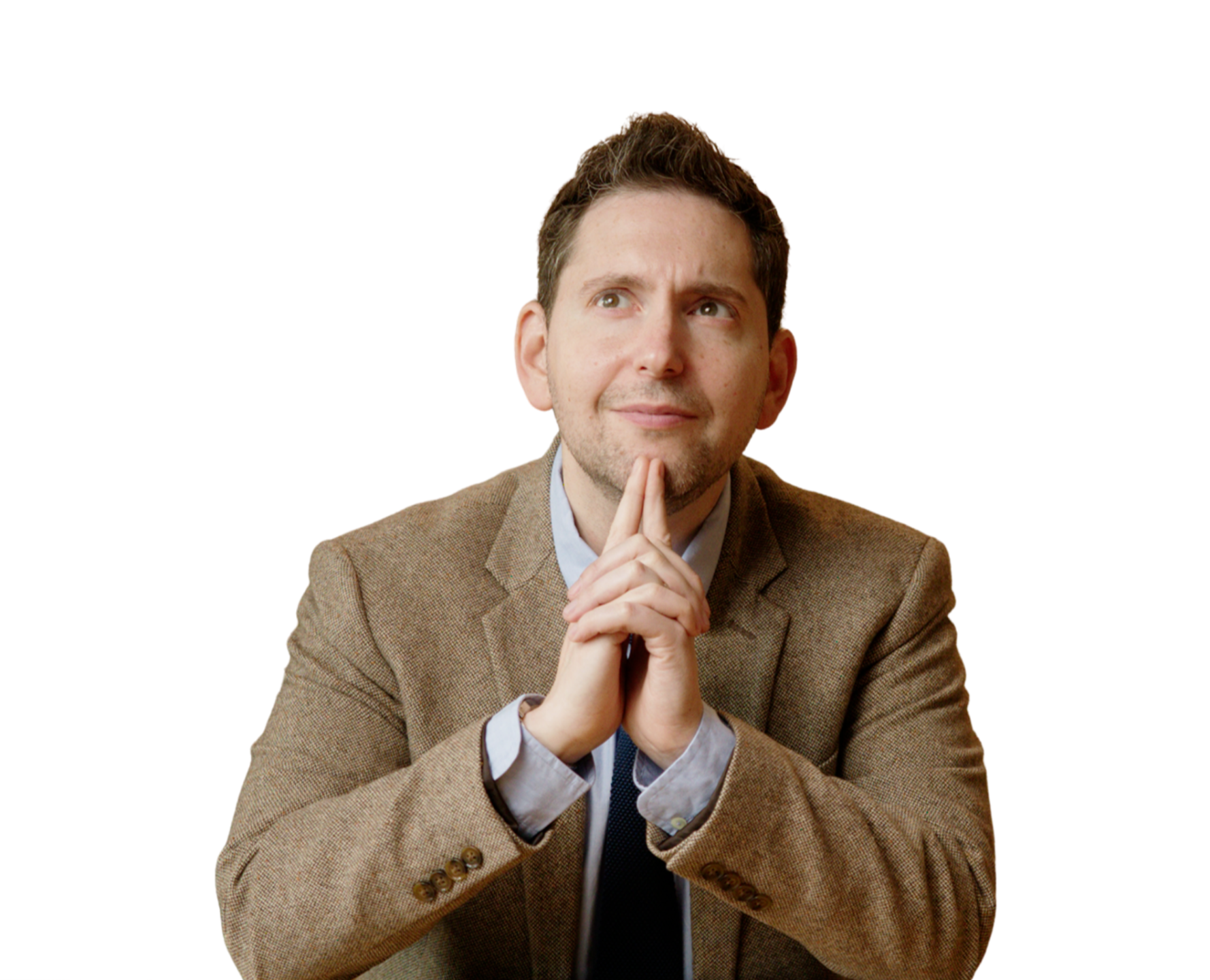
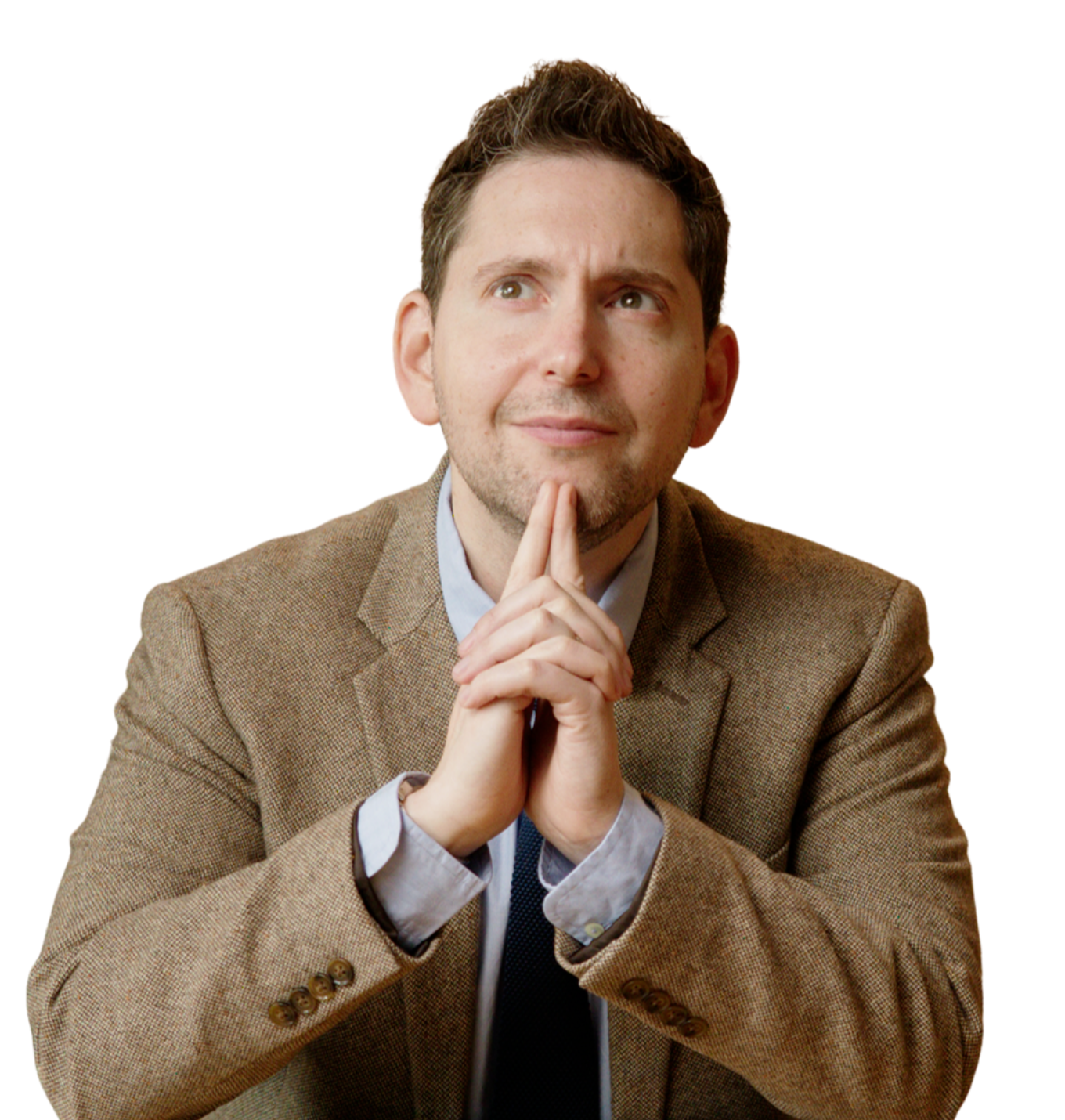
Hi — I’m Dr. Aaron Dinin.
If you’ve seen a random professor posting on social media from his classroom with his students, there’s a pretty good chance it was me. A lot of those posts are about a class I teach at Duke University called “Learning to Fail.” And every time I post about it, my inbox and comment section fills with messages:

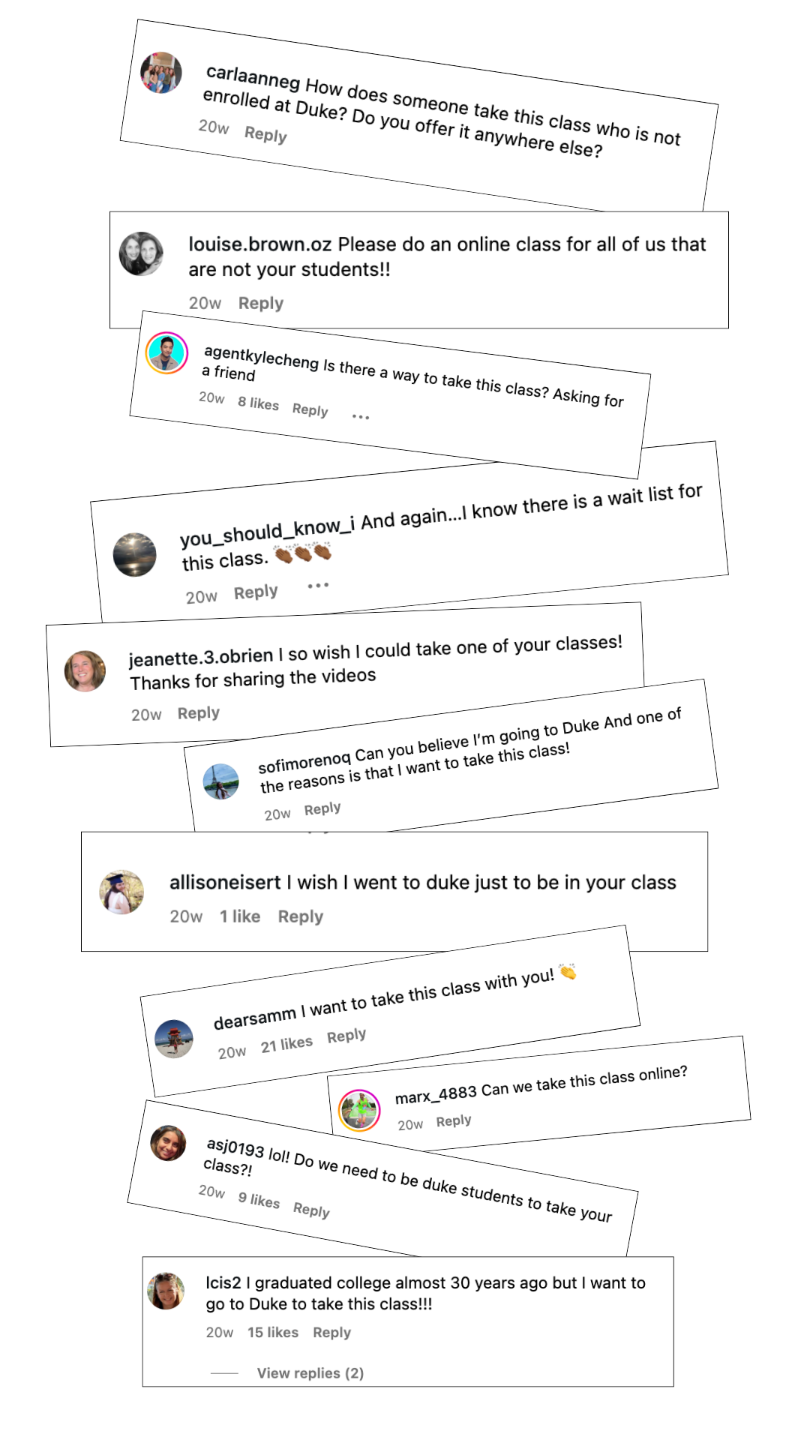
Some messages come from students at other universities, some from parents, and some come from people in their 40s, 50s, even 60s who’ve been quietly collecting failures for decades.
For years, my answer to questions about teaching an online version of Learning to Fail has always been a polite but definitive no. And I had plenty of excuses ready: It has to be done in person; It’s too experiential; It wouldn’t work outside my classroom.
However, if I’m being honest, none of those were the real reason. The real reason was embarrassingly predictable: I was scared.
What if it isn’t as good as I think?
What if people don’t understand it?
What will my colleagues say?
Will people think I’m selling out?
What if nobody buys it?
Or worse… what if they buy it then hate it?
In other words, I was doing that classic teacher move where I tell everyone else how to do something while quietly avoiding it myself. As the old saying goes, “Those who can’t… teach!”

When You Realize You’re Failing at the Thing You Teach
One afternoon, while cleaning through emails, I opened a message from someone I’d never met. It wasn’t a Duke student or alum. It was a guy in his forties working at a logistics company in Ohio.
He wrote that he'd spent most of his adult life avoiding anything that might make him look inexperienced — speaking up, applying for promotions, trying new roles. Then he watched a short clip from Learning to Fail that someone had reshared online, and, for the first time in years, he pushed himself to take a risk.
Thanks to that little nudge, two weeks later he’d earned a promotion he’d been quietly wanting for half a decade.
He was writing to ask how he could take my class, and he ended his message with a line that felt like he was holding a giant mirror to my own hypocrisy:
“If one tiny piece of your class could change my life, imagine what the whole thing could do.”
I sat there staring at that sentence, realizing the irony: I had spent years helping people break out of the mental boxes that hold them back… while hiding behind my own excuse that “this class can’t work online.”
That email made the decision for me. I needed to create an online version of Learning to Fail that anyone, anywhere could take.
Introducing: Learning to Fail — The Online Course
A five-week, self-paced journey through the real mechanics of failure.
This isn’t the motivational-speech version of “Learning to Fail” or the “webinar pretending to be a course” version. And it’s definitely not some low-fi video recordings of me giving dull lectures I’ve been droning through for decades.
This is a real course that includes:
▸ The full five-part Learning to Fail framework…
… based around everything I teach my students about the five fundamental sides of failure at the core of my Learning to Fail curriculum.
▸ Five real failure challenges…
… the same ones my students do — adapted so you can do them in your own life, at your own pace.
▸ A digital workbook…
… with prompts, questions, reflection exercises, and places to track what happens when you step outside your comfort zone.
▸ Weekly video modules (dripped over 5 weeks)...
… so you’re not overwhelmed, and so you actually do the challenges instead of rushing through them.
▸ And two free enrollments for you to share…
… because Learning to Fail works better when you do it with people.
(Feel free to invite a friend, a partner, a coworker, a sibling… or even someone you want to suffer with. Up to you.)
All of this is $197.
I thought about making it a few thousand dollars (college is expensive).
I thought about making it free (but people don’t take free things seriously).
In the end, $197 felt right.
Low enough to be accessible. High enough that it’ll hurt a little if you don’t actually do the work.
👉 Enroll in Learning to FailWhy This Class Matters
Creating this course has been terrifying for me because it hits on a lot of my own shortcomings and insecurities. And not because I’m worried it’s going to fail spectacularly. The truth is, I’m much more worried it’s going to fail quietly.
People might shrug.
People might not finish.
People might think the challenges are too weird.
People might wonder if I’m even “supposed” to be doing it…
In those moments of doubt, the one question I keep asking myself is this:
What if the thing I’m most afraid of is exactly the thing I need to be doing?
And since you’ve read this far, I suspect the same might be true for you, so maybe you’re the person who needs to read this next sentence:
Your biggest risk isn’t failure — it’s waking up ten years from now realizing you never even tried.
If this course helps even one person take a risk they’ve been avoiding, say something they’ve been scared to say, or finally try something they’ve been too intimidated to try, then the entire thing will have been worth it.
What You’ll Actually Get Out of This
I can’t promise this course will magically fix your life. That’s not how change works. But, if you do the work of the class, here’s what I believe will happen because I’ve already seen it happen for hundreds of students in my classroom:
You’ll start to see the patterns around failure you’ve been living inside without realizing it.
You’ll learn how to recognize the differences between failures that should scare you, failures that should redirect you, and failures that should fuel you.
You’ll learn why you repeat the same patterns with failure over and over again and how to begin breaking that cycle.
Most importantly, you’ll come away from this class with a sturdier, calmer, more grounded way of navigating the world when things go sideways (because they will go sideways… that part is non-negotiable).
And yes, you’ll get practical tools too:
- A framework you can apply to career decisions, relationships, and ambitious goals
- A language for understanding the pressure you put on yourself
- A process for taking risks without blowing up your life
- A system for noticing meaning in the moments that don’t go to plan
- And five hands-on challenges that help you actually practice everything (instead of just nodding and thinking “Wow, that’s interesting…”)
Also, you’ll get those two free enrollments for other people I mentioned earlier.
Can you tell I really want you to invite other people? It’s because when I teach “Learning to Fail” at Duke, my classes become families. I want the same thing for the online version.
Bringing people with you is what’s going to help us turn Learning to Fail into something bigger than a course. We’ll turn it into a community of people who are learning, stumbling, experimenting, and growing together.
This Is For You, But It’s Not a Paywall…
I’m still going to write my newsletter for free. (You should subscribe here if you haven’t!)
I’ll continue posting videos nearly every day. (You should follow me if you haven’t!)
Basically, nothing I’ve been doing is changing or going behind a paywall. This course is simply a deeper way to experience the philosophy that has shaped my teaching and my life.
It’s what so many of you have asked for, and, by creating it, I hope it’s a way for me to give people what they’ve wanted while also practicing what I preach about confronting failures.
If you’d like to join me — and if you’d like to bring two people with you — I’d love to have you.
Come fail with me,

Are you ready to join me?
GRAB YOUR SEAT TODAY.
$197
Can't afford it right now? Let me help.
I know $197 lands differently for different people. For some of you, it’s not a big deal. For others, it’s a meaningful chunk of change, and the last thing I want is for Learning to Fail to feel inaccessible to anyone who might benefit from it.
With this in mind, and in the spirit of… well… college, if you need a little help, here’s an opportunity for “financial aid.” I can’t promise full scholarships for everyone, but I can promise we’ll try to figure something out.
Join Dr. Dinin's Learning to Fail Newsletter.
Get my latest insights and resources right to your inbox.
